Amazon Marketing Strategy for B2B: Trends, Shifts & How to Adapt

Contents
1. AI-Led Discovery Is Rewriting Product Visibility
2. Generative AI Creative at Scale
3. Streaming Has Become an Interactive Engagement Channel
4. Rise of Omnichannel and Multi-Format Content
5. First-Party Data Activation Through Amazon Marketing Cloud
The Framework: How to Operationalize Amazon Marketing Trends in 2026
1. Enroll in Amazon Brand Registry
2. Audit Product Listings for AEO and Generative AI
3. Invest Marketing Budget in Amazon DSP and CTV
4. Configure Amazon Attribution for Off-Amazon Measurement
5. Activate Amazon Marketing Cloud
‘The traditional linear shopping journey has fundamentally transformed. Nearly 60% of consumers report feeling like they multitask more than they used to, and this always-on culture has reshaped their approach to shopping.’ — Amazon
For B2B brands selling on Amazon, the same shift demands a new operating model. AI shopping assistants now sit between the buyer and the product. Generative AI is redefining creative production cycles. Streaming has become an interactive engagement channel. Buyer journeys span multiple surfaces that demand one consistent brand identity. Amazon Marketing Cloud (AMC), meanwhile, ties ad exposure to downstream conversions.
This piece breaks down five Amazon marketing trends reshaping how B2B brands build visibility, convert demand, and measure performance. It also covers a framework for B2B brands to optimize their marketing strategies in response to these trends. Let's begin!
Future of Amazon Marketing
1. AI-Led Discovery Is Rewriting Product Visibility
Rufus, Amazon's conversational shopping assistant, helped 300 million users in 2025 with their shopping. Moreover, Generative AI shopping assistants like Google Gemini and ChatGPT help buyers research vendors, compare options, and shortlist products before they open Amazon.
Source: Adobe
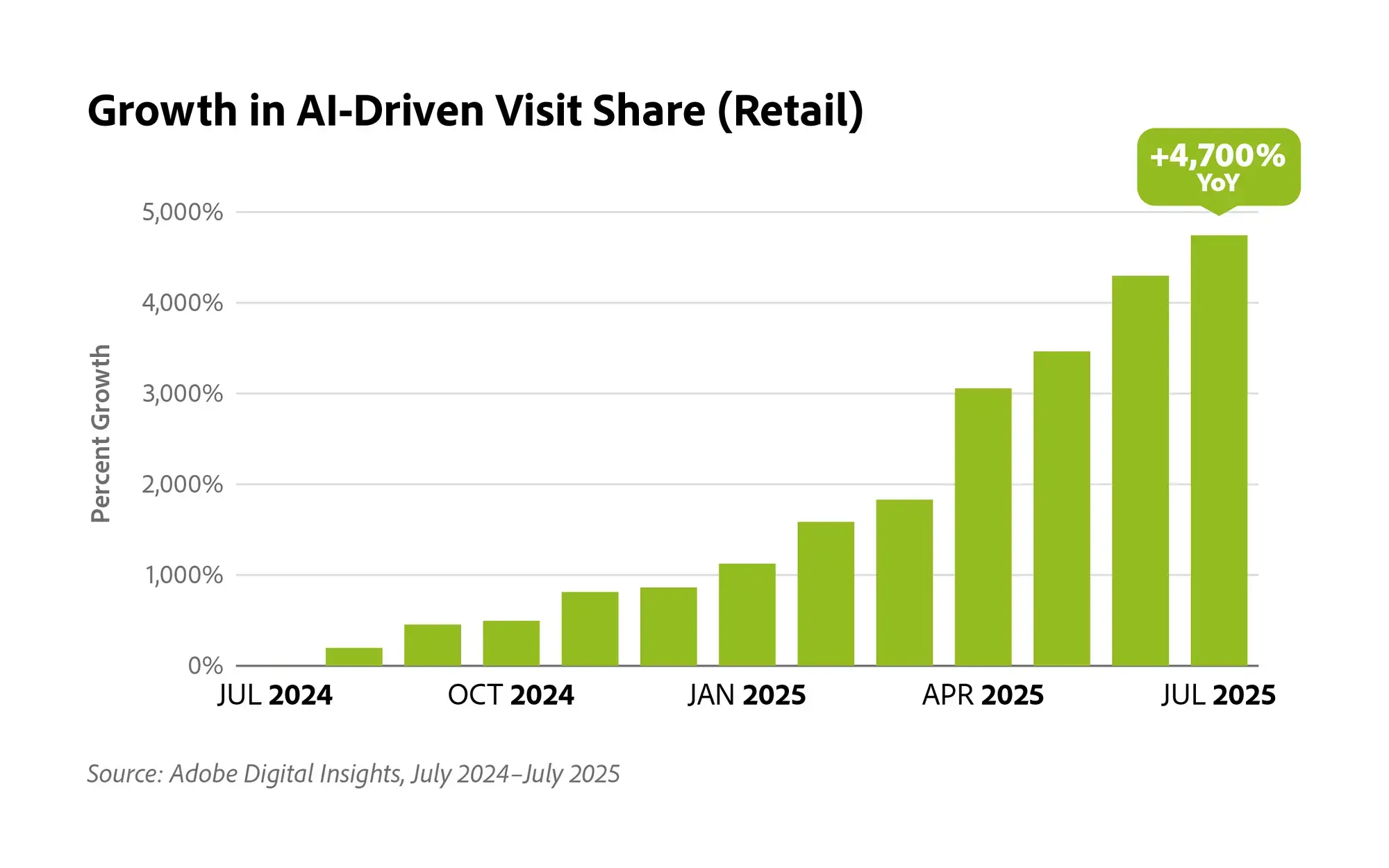
AI tools are becoming a much more important traffic source for retail brands — still likely from a small base, but growing very fast.
Voice commerce is the third surface, where shoppers issue spoken product queries through smart speakers, smart displays, and voice-enabled apps. Alexa+, Amazon's relaunched generative-AI voice assistant, leads the category by interpreting natural-language queries and returning conversational, citation-backed recommendations.
Source: Amazon
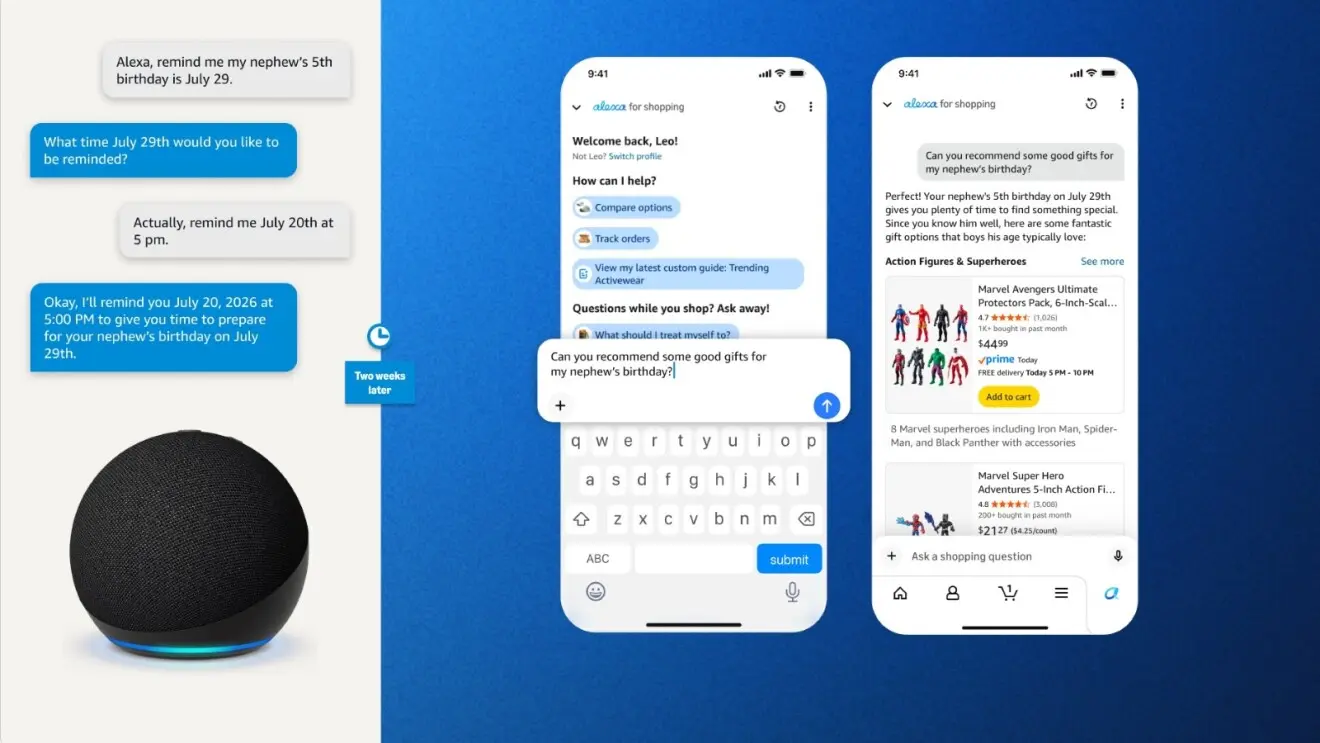
Buyers interact with these interfaces via natural-language queries, such as:
"Which 5-gallon shop vac handles fine drywall dust?" or
"Compare these two compact label printers for a warehouse environment."
AI interprets the underlying search intent, recognizes semantically equivalent product attributes regardless of exact phrasing, and returns a curated, citation-based answer. Shoppers refine the recommendations across price, specifications, and compatibility through follow-up questions prior to the purchase.
How B2B Brands Should Optimize for AI-Mediated Discovery
- Restructure product listings around Answer Engine Optimization (AEO): Rewrite bullets as direct answers to buyer questions. Add comparison tables that AI systems can parse. Seed Q&A sections with queries Rufus and external LLMs are already fielding.
- Support B2B buyers with the technical details: Include all relevant specifications, compliance certifications, use case suitability information, and warranty information in your A+ content and structured product attributes.
- Extend your citations to other sources besides Amazon: Third party reviews, comparison articles, and industry publications are used by other LLMs to learn about the manufacturers and sellers of B2B products. Getting cited on other credible B2B websites will improve the chances of you getting recommended as a vendor when buyers ask ChatGPT or Claude for recommendations.
- Track and make changes to your product listings regularly: Search for similar questions to the ones a customer would ask on Rufus, Claude, and ChatGPT, and adjust your listings and non-Amazon content accordingly.
2. Generative AI Creative at Scale
Generative AI enables brands to produce, test, and scale Amazon ad creatives. It automates lifestyle image generation, video creation, and localized ad copy, helping sellers optimize campaigns and boost conversion rates.
Amazon Ads has launched Creative Studio, a free, built-in generative AI tool for in-platform asset generation. The tool produces ad concepts, lifestyle images, and product videos drawn from a brand's catalog and audience signals.
Source: Amazon
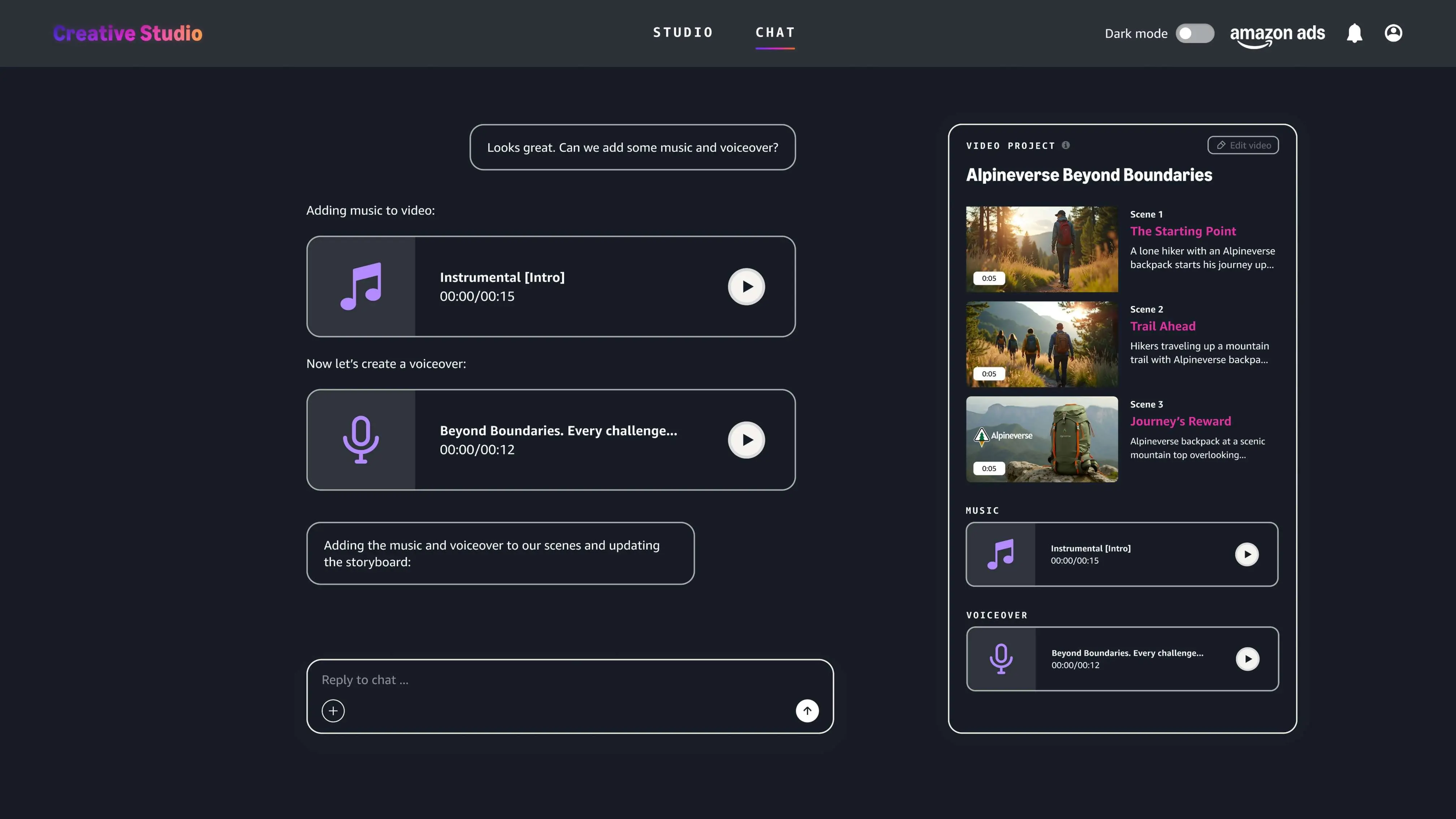
For B2B brands, this offers scalable creative production, faster campaign launches, and lower per-asset costs.
How B2B Brands Should Apply Generative AI Creative
- Pilot generative AI creative tools: Run an evaluation across Amazon Creative Studio and other generative AI creative platforms. Benchmark output quality and production time against current workflows.
- Create different variations: For every ad campaign create four to six variations of ads for Sponsored Brand video, Amazon DSP (Amazon's Demand-Side Platform) and CTV, in order to determine the combination of ads that produces the best conversion rates.
- Localize creative for regional audiences: Use generative AI to generate various versions of the same creative for different languages and markets. Test your visuals in different geographic locations to fine-tune your messaging to each of the target B2B buy segments in that specific geographical market.
- Associate creative iteration with conversion metrics: Monitor how well these creative iterations have converted by measuring the lift in conversion rates, the cost of acquiring customers and the length of time it takes for the first campaign to go live after launching a campaign with these variations.
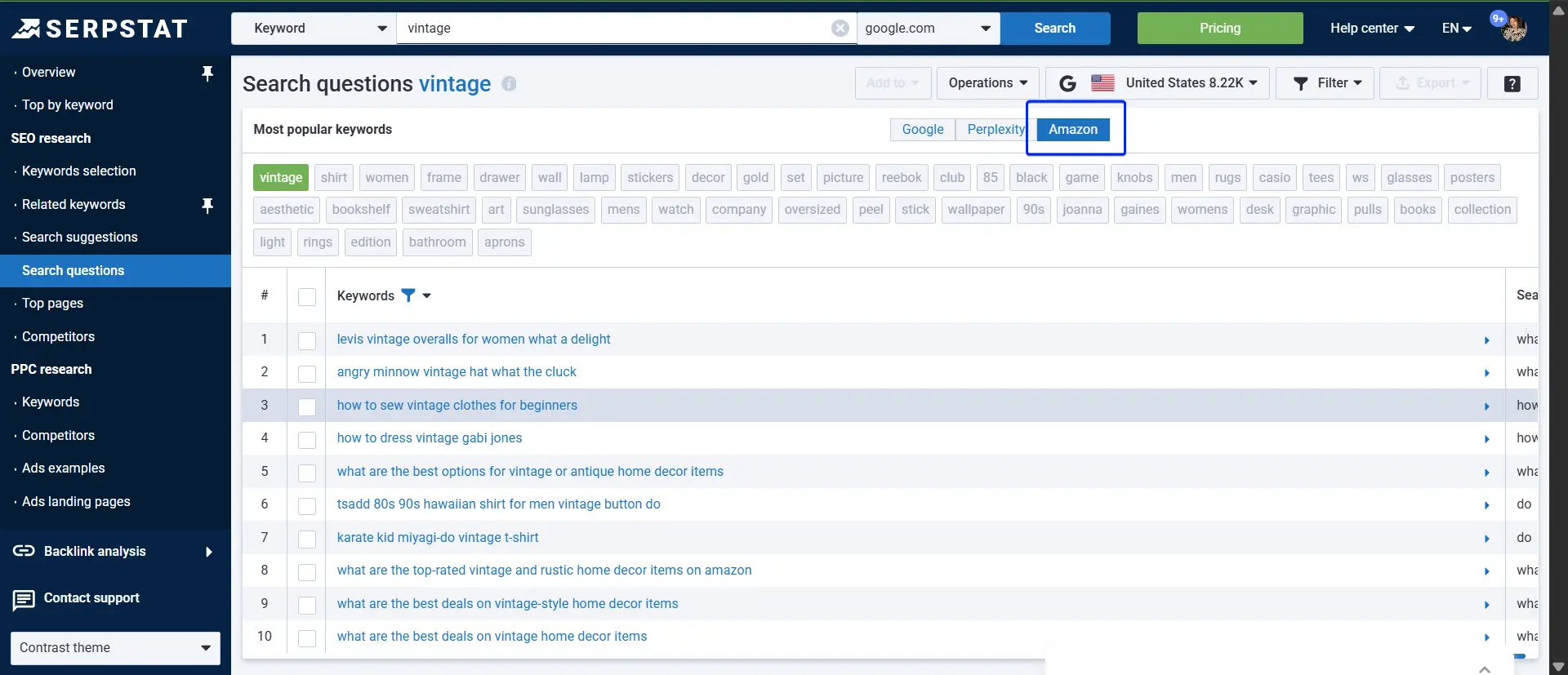
Amazon search data alone rarely captures the full spectrum of buyer intent. Serpstat enables marketers to discover keyword opportunities from Google, Bing, Amazon, and AI-powered search environments, helping teams identify emerging topics, long-tail queries, and commercial intent patterns. These insights can be used to optimize product titles, bullet points and FAQ sections for both Amazon's algorithms and AI-driven recommendation systems:
3. Streaming Has Become an Interactive Engagement Channel
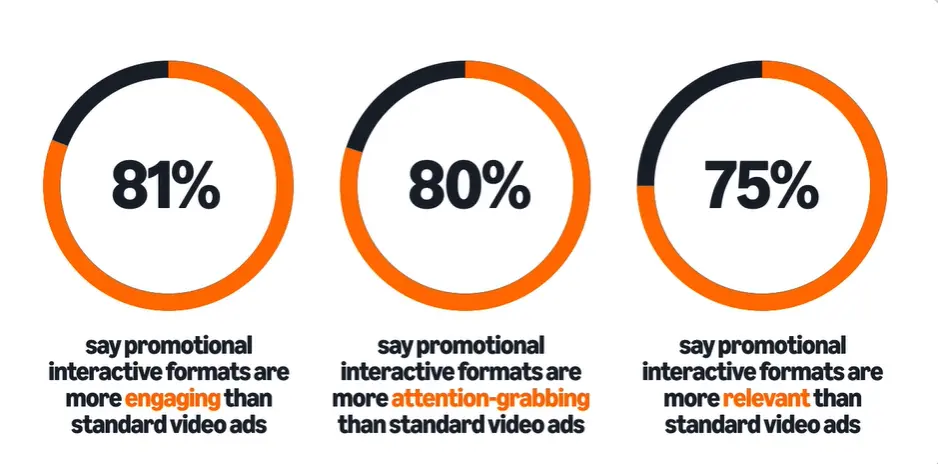
Amazon's CTV inventory has evolved beyond standard video. Prime Video's ad-supported tier now reaches over 315 million monthly viewers globally. Within that surface, Amazon has built two formats that turn streaming into an interactive channel: interactive video ads and pause ads. The shift matters first for shoppers.
- Pause ads appear during breaks, when the viewer has already chosen to step out of the content.
- Interactive video ads embed actions directly into playback.
Both ad formats let viewers act on a product, such as checking a price, adding to the cart, or saving for later, with no interruption in the content they are watching.
This model translates into measurable brand performance and drives 3- to 4-percentage-point lifts in brand opinion, consideration, and purchase intent.
Source: Amazon
4. Rise of Omnichannel and Multi-Format Content
Shoppers are looking for a uniform and consistent experience across all channels. The same buyer sees a brand on multiple surfaces: ads on Prime Video, social feeds, YouTube, and Google search results. They want brand identity, messaging, product story, and pricing to be consistent in all points. A fragmented presence across channels, with different brand messaging, various claims, and broken links across the content pushes buyers back to competitors.
Amazon has expanded its surfaces and content formats to support this consistency.
- Brand Stores carry a brand's identity into a dedicated space inside Amazon.
- Amazon Live extends that identity into social-style content and shoppable video.
- Sponsored Display and Amazon DSP carry the same creative off-Amazon, retargeting shoppers across third-party publishers based on Amazon shopping behavior.
- Brand Tailored Promotions and Brand Follow maintain the relationship after the first interaction.
What makes the loop work is the consistency of the message, not the multiplicity of channels. For instance, a brand running ten different campaigns with ten different value propositions fragments its own discovery. Whereas a brand that runs one coherent narrative across listings, video, social content, and off-Amazon ads becomes recognizable, laying the foundation for recall and loyalty.
5. First-Party Data Activation Through Amazon Marketing Cloud
Amazon Marketing Cloud has emerged as the measurement layer connecting Amazon ad activity to advertisers' own customer data. The platform became free for all Sponsored Ads advertisers in September 2025 and is now available on AWS Clean Rooms.
In the broader retail media landscape, AMC plays a role similar to data clean rooms in other walled gardens. It lets brands combine first-party data, including customer emails, CRM segments, and DTC (Direct-to-Consumer) website behavior, with Amazon's exposure and conversion data. The integration happens inside a privacy-safe environment with no identifier exposure on either side. The wider availability of AMC has made it a foundational tool for advertisers running multi-format campaigns across Sponsored Ads, DSP, and Sponsored TV.
AMC Closing the CRM-to-Amazon Attribution Gap
For B2B brands, AMC addresses a long-standing measurement gap. Marketing teams have historically struggled to link Amazon ad exposure to deals tracked in CRM systems such as Salesforce. AMC enables that connection. A B2B brand can upload its sales-qualified lead list and match it against Amazon ad-exposure data. The output shows whether the buying committee encountered the brand on Amazon during the consideration window. AMC has shifted measurement from estimation to direct attribution.
How does it work in a real-life scenario?
Consider a B2B office equipment brand. The team could connect the bounced-off traffic from the DTC website to Amazon purchase records. From there, the brand would build an AMC custom audience of traffic who later purchased on Amazon. The next step targets lookalikes through cross-channel sequential messaging.
The Framework: How to Operationalize Amazon Marketing Trends in 2026
1. Enroll in Amazon Brand Registry
Amazon Brand Registry allows you to access A+ Content, Brand Stores, Brand-specific Promotions, Brand Follow and Brand Analytics. By registering your brand with Amazon, you will gain control over the editorial content, audience and analytics for that particular brand on Amazon.
2. Audit Product Listings for AEO and Generative AI
Perform an entire catalogue report of titles, bullets, A+ Content, backend keywords, structured product attributes, and Q&A sections. Review bullets to be direct answers to how B2B buyers have actually asked questions of you. Add a comparison table to all A+ Content modules to allow AI systems to obtain specs, certs, and compare features. Provide at least ten buyer-relevant questions to each of the top-selling ASIN Q&A's.
3. Invest Marketing Budget in Amazon DSP and CTV
Allocate budget to LinkedIn and trade media (TVs) to add Ads on Amazon's Demand-Side Platform and use the LinkedIn/Amazon DSP partnership for CTV media. Run an incremental lift test for 60-90 days, utilizing all 3 of the following objectives: unified campaign naming, single conversion definition, and pre- and post-benchmarks, allowing for measurement of the incremental lift for the budget being spent in the trial.
4. Configure Amazon Attribution for Off-Amazon Measurement
Activate Amazon Attribution to measure off-Amazon traffic sources driving Amazon sales. The tool is free for Brand Registry sellers and supports tagged links across email, social, display, video, and search. It provides view-through and click-through attribution to Amazon detail page views, add-to-carts, and purchases. Apply attribution tags to every off-Amazon B2B campaign that points buyers to Amazon Brand Stores or product detail pages.
5. Activate Amazon Marketing Cloud
Upload first-party CRM and DTC data. Build at least one custom audience. Replace ROAS with a composite KPI that includes new-to-brand percentage and lifetime value.
6. Build Cross-Channel Operating Capability
Pick a naming convention and use it everywhere across Sponsored Ads, DSP, AMC, and CTV. Without one, cross-channel reporting falls apart fast. Build audience segments inside AMC once. Reuse them across every channel instead of rebuilding lookalikes per platform. Settle on one conversion event and apply it consistently. It needs to count both Amazon.com purchases and Amazon Business orders. Mixed definitions make the data unusable.
Build one dashboard. Sponsored Ads, DSP, CTV, and AMC should all feed it so the team has a single view for weekly performance review.
The Business Case: How to Choose the Right Operating Model
Optimizing for Amazon marketing trends requires expertise across AEO, DSP, AMC, Creative Studio, CTV, and omnichannel governance. Each layer requires distinct specialist execution, and the pace of platform change keeps accelerating. For most B2B brands, the strategic question is how to structure the operating model that delivers across all of them.
Building this capability in-house comes with real costs. Three patterns show up most often.
High Overhead. A team of AEO, DSP, AMC, and Sponsored Products specialists is fixed payroll. The cost stays the same whether the brand runs three campaigns a quarter or thirty.
Steep Learning Curve. Amazon's algorithms change every month. The in-house team has to keep up alongside doing the day job. Usually one or the other gives.
Talent Scarcity. Senior Amazon specialists are hard to hire and harder to keep. They get poached, they cost more each year, and most B2B brands aren't competing in the same talent market as the agencies that hire them.
Some brands solve this by adding roles. Others partner with an Amazon marketing agency and some operate on a combined model. Outsourcing gives the team flexible resource capacity, predictable pricing, and access to field-level expertise.
The right answer depends on category, campaign load, and where Amazon sits in the brand's wider marketing plan. The strategic method would be aligning the operating structure to the pace of the trends, not the other way around.
Analyze keywords, competitors, and AI visibility signals
Discover More SEO Tools
Domain Analysis Tools
SEO Domain Analysis – gain insights into your website's strengths and weaknesses
URL Inspection Tool
Uncover hidden SEO opportunities with our powerful URL Inspection Tool
Keyword Rank Checker
Google Keyword Rankings Checker – gain valuable insights into your website's search engine rankings
Competitor Website Analytics
Complete analysis of competitors' websites for SEO and PPC
Recommended posts
Cases, life hacks, researches, and useful articles
Don’t you have time to follow the news? No worries! Our editor will choose articles that will definitely help you with your work. Join our cozy community :)
By clicking the button, you agree to our privacy policy.