Poisoned SERP: What It Is and How It Affects Rank Tracking

A poisoned SERP is a Google results page that looks completely normal but carries the wrong organic results. Since September 2026, automated data providers for SEO rank trackers have been receiving such pages in a noticeable share of cases. No error or CAPTCHA warns the tool, so it records the page as genuine data, and a site can seem to lose its top-10 position for a day or two although nothing changed for it.
Below: what is happening, how to recognize a poisoned SERP, and how to check in Serpstat Rank Tracker whether a ranking drop is real.
A note on sources. Serpstat collects SERP data through data providers that we cannot name for contractual reasons. The studies, figures and vendor statements below therefore come from open sources, and only the examples and observations marked as Serpstat’s come from our own data.
Why a Sudden Google Ranking Drop May Not Be Real
A sharp drop in tracked positions can come from how the data was gathered. From around September 20, Google has been answering some automated requests with a page that looks complete, with the same template, ads and features, but with most of the usual organic results swapped for others.
The size of the share depends on the collection method. Nozzle, whose study is the largest public dataset so far, counted 8.7% of first pages as poisoned between September 13 and October 21, against 0.17% before. With a peak of 43.5% on September 30. Other providers report different rates (up to 71,5%). DataForSEO, measuring on its own side, reports noticeably fewer poisoned results since October 10.
Source: Noozle
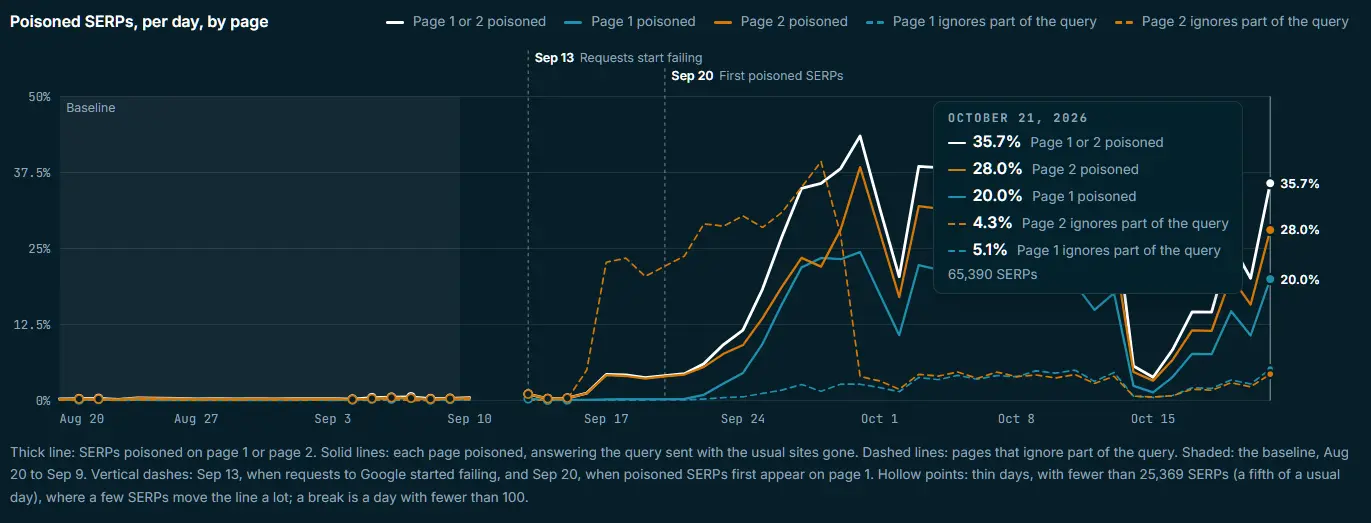
A regular block makes a tool try again, but a plausible wrong page goes into the database as if it were genuine. Nozzle reads this as a Google countermeasure against AI scraping that also catches rank trackers. Google has not publicly commented, so this remains an interpretation.
The reported share depends on who collects the data and how it is measured:
The industry is adapting. Ahrefs says it filters abnormal results and cleans up past data. AccuRanker and SEOmonitor compare new pages with a keyword's recent history and re-fetch suspicious ones. Semrush says it screens results at collection time, drops those that are plainly invalid, switched some data sources after checking their quality, and re-collects results that its validation checks flag as doubtful. Statements from other vendors are gathered in Search Engine Roundtable’s running coverage.
Serpstat is affected in the same way. SERP collection depends on automated requests, which is the traffic Google answers with poisoned pages. We apply additional quality checks, flag suspicious snapshots, avoid conclusions from a single abnormal collection, and re-check suspicious SERPs. These re-checks do not use up your limits.
Signs of a Poisoned SERP
A poisoned SERP rarely announces itself, so the signs below are patterns rather than proof.
Page 2 appears to be hit more often than page 1. In Nozzle’s data it is poisoned about 1.5 times as frequently (17.9% of SERPs against 12.2% for page 1), and in 58.4% of those cases page 1 still looked fine. Semrush likewise says that most cases it sees are beyond the first page. In Serpstat’s own checks, poisoned SERPs have so far appeared on different result pages.
Nozzle also sees higher rates for "near me" searches and for long-tail keywords, and lower rates for brand queries. By country, its page-1 rate runs from 4.1% in the United Kingdom and 8.8% in the United States to 21.0% in Austria, with Ukraine at 13.0%.
The reliable test is a comparison with the keyword's own history: Nozzle treats a page as poisoned if less than half of the sites that usually rank for that keyword show up anywhere on it. Poisoned pages can also look plausible: DataForSEO describes an "iphone" search where YouTube videos may lead instead of Apple's own site, yet every result is still about iPhones and nothing about the page raises suspicion.
The general characteristics:
- The results answer only part of the query. Google may match a single word of a longer query. It is treated as a related but separate fault, and the two can overlap.
- The usual sites are replaced. Social networks and forums move in: Facebook, Reddit, Quora, Pinterest.
- Marketplaces rank for informational queries. An online store appears for a query that looks for information, not a product. Etsy, eBay, Amazon, etc.
- "People also ask" and "People also search for" are off-topic.
- Domains repeat and pagination ends early. The same site can take several positions, or the same result repeats on several pages. For desktop keywords whose results normally reach page 8, pagination ends at page 4 or sooner.
- Ads and Shopping stay the same. The paid blocks barely move, which helps the page look intact. In Serpstat's data, the changes were limited to organic positions and sometimes "People also search for"; ads and other special elements stayed in place.
An example from Serpstat data. The query "best dedicated server usa", collected on October 20, 2026 on Google mobile. Page 1 is normal: hosting providers and on-topic suggestions. The next pages of the same snapshot are not.
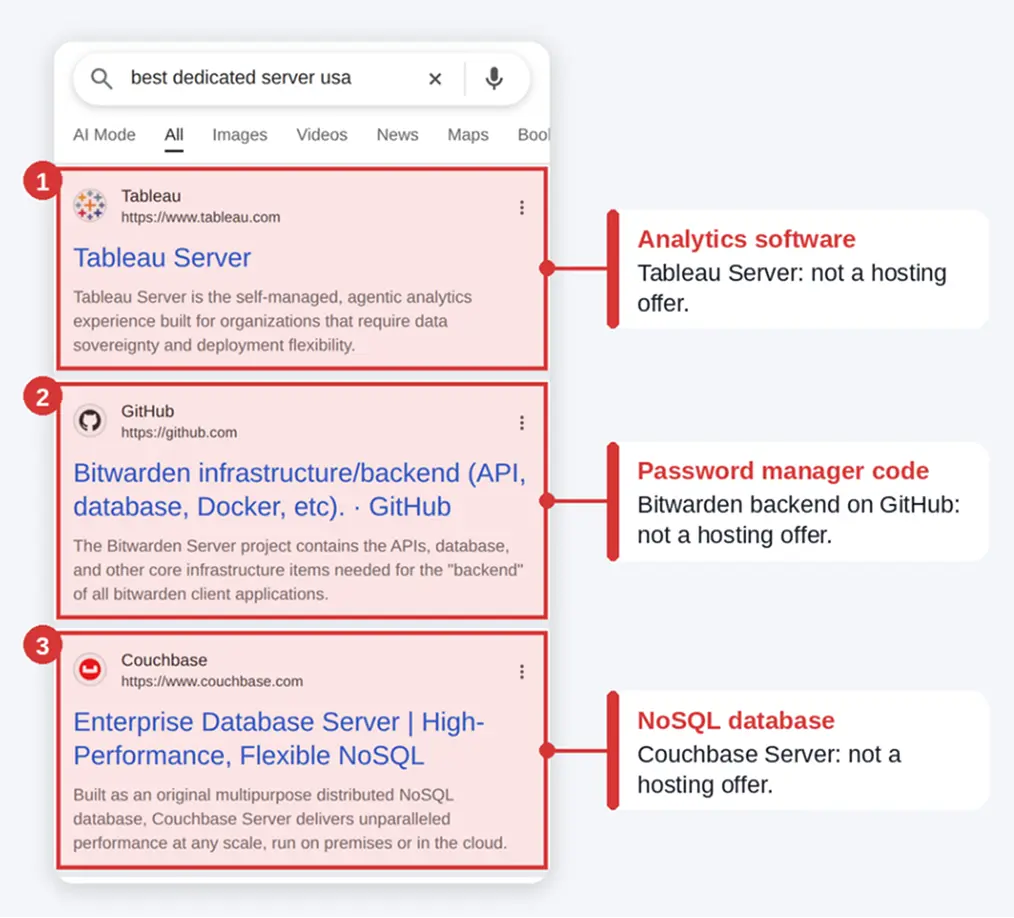
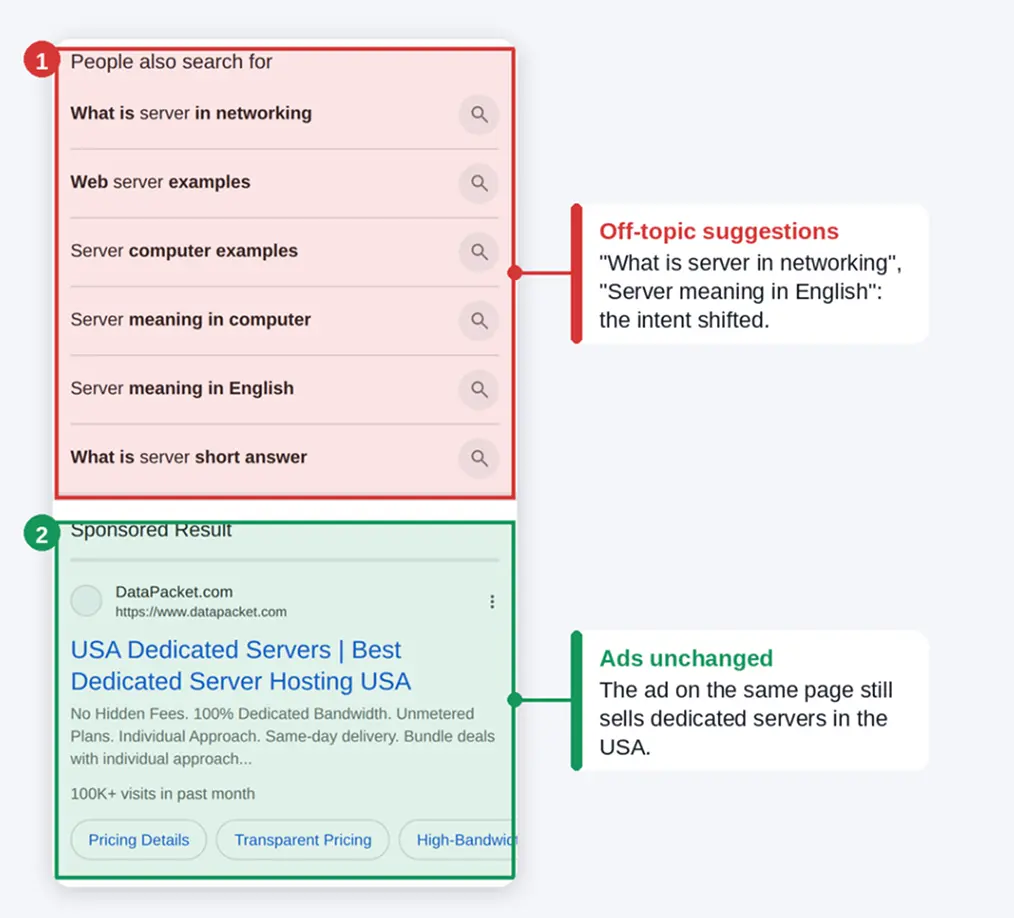
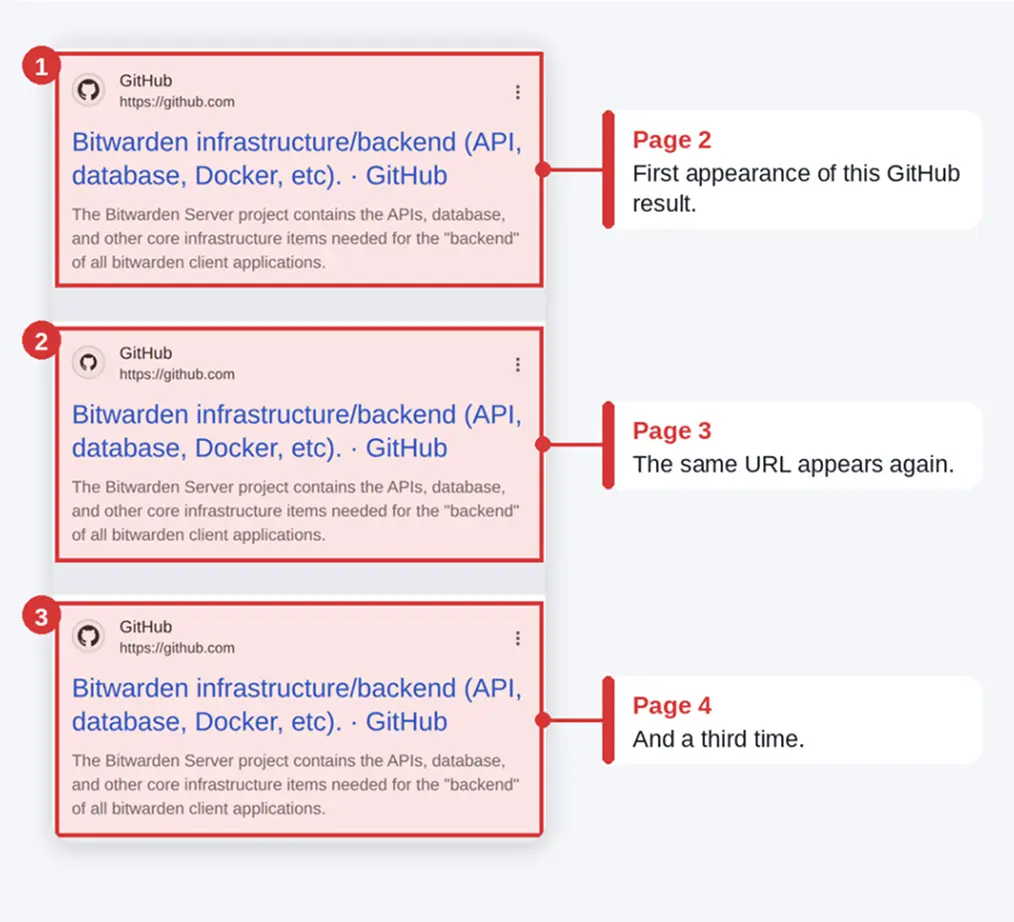
A site ranking around position 15 for this query would simply vanish from a report built on this snapshot. These signs can change. Google adjusts how it serves such pages, and vendors have already seen poisoned results lose their familiar markers. Treat the list above as a starting point, and rely on the keyword’s own history.
Google Ranking Drop: How to Check If It’s Real
When many keywords change position at once, look at the SERP before you change your site. In Serpstat Rank Tracker, four steps are enough to tell a poisoned snapshot from a genuine ranking change: see whether the move is mass, compare the SERP across dates, inspect the saved page, and verify the query manually.
1. Check Project Overview
Open Rank Tracker, Project overview. One keyword is a local story; many keywords moving at once point to something systemic, so if many phrases changed position sharply, look at the SERP before you change your site.
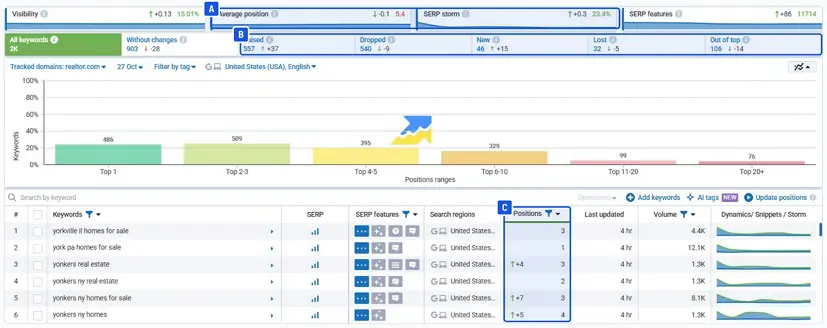
- A. Average position and SERP storm give the overall picture: here 5.4 (−0.1) and 23.4% (+0.3).
- B. Counters show how many keywords raised, dropped or left the top: here 557 raised, 540 dropped and 106 out of top.
- C. The Positions column shows how far each keyword moved. Jumps of dozens of positions at once are the signal to look at the SERP.
A sudden rise deserves the same check as a sudden drop.
2. Compare SERP History
Go to Rank tracker, SERP history, pick a keyword whose positions changed sharply, and choose a date or a date range.
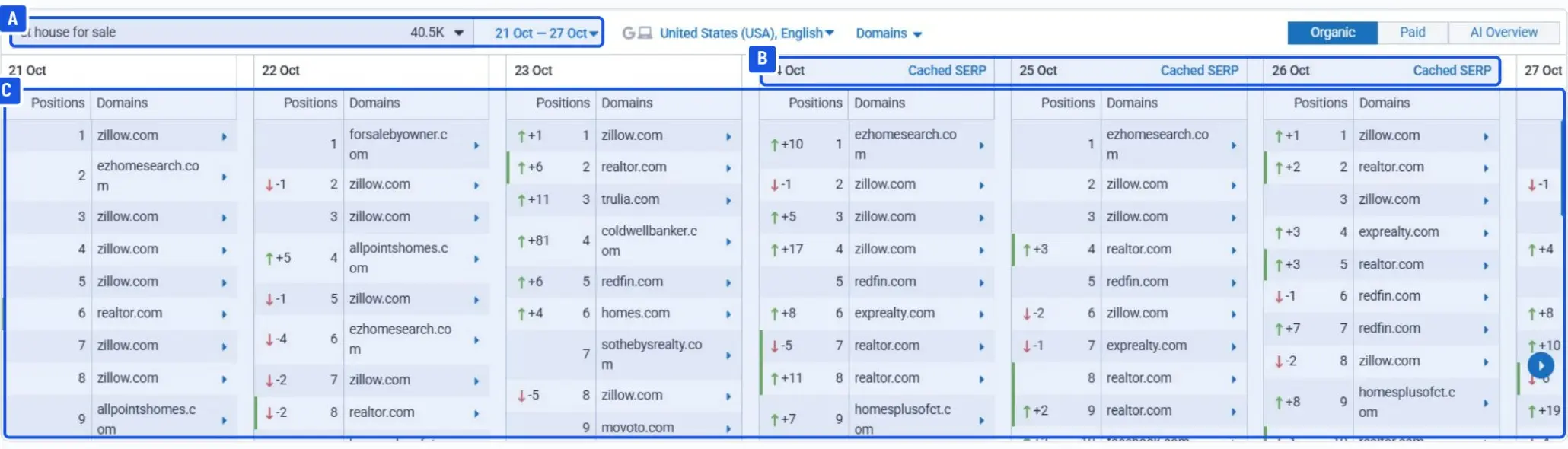
- A. Pick a keyword and a date range: each day gets its own column.
- B. Click "Cached SERP" above a date to open the saved copy of Google's results page for that day.
- C. Compare the top across days: do the domains match the query? Look for marketplaces on informational queries and for duplicates from Quora, Reddit, Pinterest.
Compare the drop day with several earlier dates rather than only the day before, since that day may itself have been a poisoned reading, as Nozzle points out.
3. Inspect the SERP Cache
The cached SERP shows a saved copy of Google's results page from the time the data was collected: the SERP Serpstat saw during analysis.
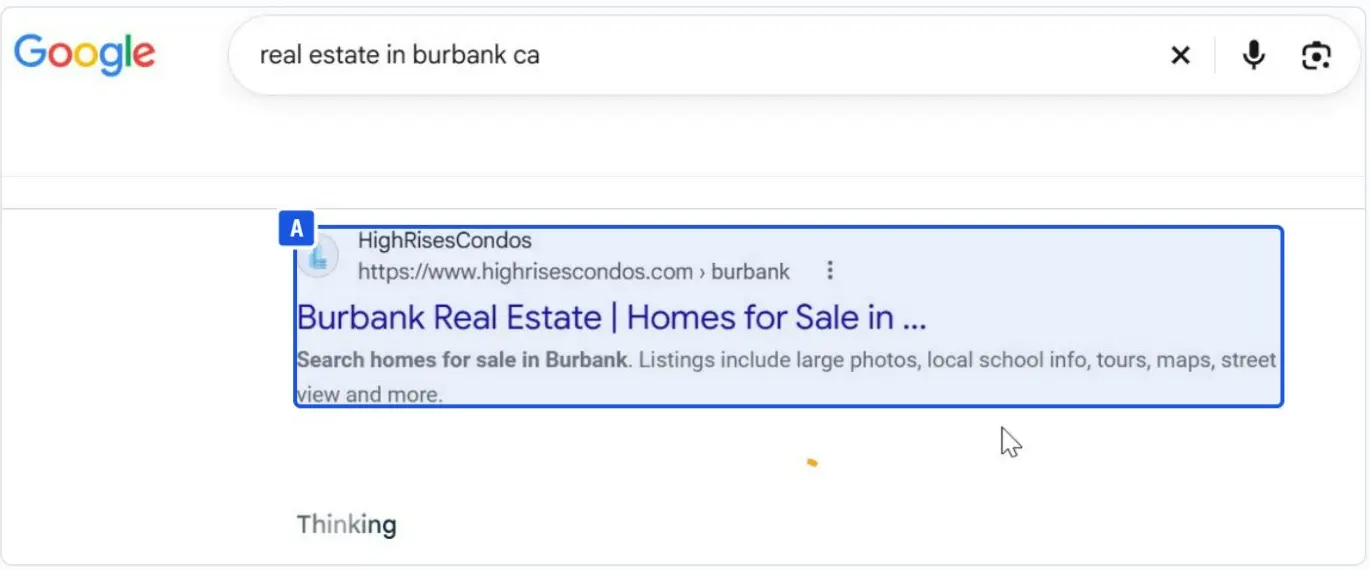
- A. Check whether the result matches the full search intent, not just a broad term in the query.
- Scroll the cached SERP to "People also search for": off-topic suggestions are easy to spot there.
- Open the cached SERP for two dates: comparing the top results shows exactly what changed.
4. Verify the Results Manually
Search for the same query manually in Google, using the same country, language, and device settings as in your project. Then add a note with the date.

- A. "Actual SERP" shows the same SERP as the cached one: the data comes from the same automated collection. It is not an independent verification.
- B. "Project notes": record the date, keyword, and what you observed, so it is easier to tell an anomaly from a real change later.
Your own rankings. You can always check them in Google Search Console. It shows your site's average position for the selected period, not its position at a specific moment. A site that vanishes from a tracker but keeps its impressions and clicks in Search Console has most likely lost nothing in Google. Reddit discussions described exactly this mismatch: the tracker said a page had disappeared, while Search Console and a manual check showed otherwise.
Note, competitor data is not available in Google Search Console.
How to Interpret the Results
Compare what the cached SERP and your manual check show, then match it to one of three cases:
A real ranking loss tends to stay, while a poisoned reading tends to disappear: Our colleagues found that about four in five poisoned episodes appear in only one collection. So wait for two or three updates and judge the trend and Visibility rather than single positions.
Conclusion
What to do now. Don't act on a single sharp move in your rankings: compare the cached SERP with a manual check, wait for two or three updates, and judge the trend and Visibility rather than single positions.
What to expect. Google will likely keep changing how it shows results and who can collect them, so odd readings may return from time to time. Treat rank data as a trend to read, not an exact number to chase.
What it may cost you. Reliable collection is getting more expensive: Google has made it harder, from the num=100 change to more CAPTCHAs and wide IP blocking, and checking suspicious results again adds work. Some expects daily tracking to become pricier and less frequent. For you, that may mean weighing update frequency against price and depth of tracking.
Ways to cross-check. Use Search Console (it has no competitor data), check weekly rather than daily, and track a few stable "canary" keywords, such as a brand name that normally ranks first, to spot a bad day. None of these replaces a rank tracker, but together they make bad data easier to catch.
Beyond rankings. Your visibility now also depends on how AI platforms mention your brand. In Serpstat, AI Visibility (formerly LLM Brand Monitor), a section in the sidebar, shows how your brand and your competitors appear in AI answers, so you can look at both views together.
Join the conversation. What do you think will happen to rank trackers, and which trade-offs are you ready to accept: less frequent updates, higher prices, sampled results, or more reliance on Search Console? Tell us in the comments on LinkedIn and X.
We update our Help Center page as the situation changes. This text reflects what we know as of October 27, 2026.
Track AI Visibility Alongside SEO Rankings
Recommended posts
Cases, life hacks, researches, and useful articles
Don’t you have time to follow the news? No worries! Our editor will choose articles that will definitely help you with your work. Join our cozy community :)
By clicking the button, you agree to our privacy policy.