From Keyword List to Content Strategy: How to Turn SEO Data Into High-Impact Topic Clusters

Contents
Why a Keyword List Is Not a Content Strategy
- Publishing Isolated Articles
- Ignoring Search Intent
- No Connection to Business Goals
- Keyword Lists vs Content Strategy: Understanding the Difference
Understanding What Your Keyword Data Actually Reveals
- Search Demand
- Search Intent
- Topic Relationships
- The Strategic Shift: From Keywords to Topic Clusters
- The Topic Cluster Model
Step-by-Step: Turning Keywords Into a Content Strategy
- Step 1: Group Keywords Into Topic Themes
- Step 2: Identify the Pillar Topic
- Step 3: Map Content to the Customer Journey
- Step 4: Define Content Attributes
- Step 5: Build Semantic Internal Linking
Applying Context Layers to Strengthen the Strategy
Content Audits: Turning Old Posts Into Topic Clusters
Using SEO Data to Measure Strategy Performance
Most SEO strategies start similarly: Someone has exported hundreds or thousands of keywords from a research tool. At first, this looks like success. A long keyword list feels like a roadmap to organic traffic.
But data alone rarely leads to growth. Studies show that nearly 96.55% of web pages receive little or no organic traffic from Google, often because they target isolated keywords without a clear topical strategy.
The problem isn't the keywords. The problem is the lack of strategy.
Modern search engines evaluate topical authority and semantic relationships, not isolated pages optimised for single phrases. A page no longer ranks simply because it contains a keyword. It ranks because it belongs to a well-structured content ecosystem.
That's why the real challenge for SEO teams today is not collecting data; it's turning that data into a content strategy.
In this article, I'll show how I transform a raw keyword list into a structured topic cluster strategy that improves rankings, strengthens authority, and helps businesses make smarter SEO decisions.
Why a Keyword List Is Not a Content Strategy
A keyword list is only raw data. It shows what people search for, but it doesn't explain how those searches connect.
Without structure, teams often make three common mistakes.
Publishing Isolated Articles
Many SEO campaigns publish separate articles for every keyword variation. For example:
- content strategy template
- content strategy examples
- content strategy tools
When these articles are not connected strategically, they compete with each other instead of building authority.
Ignoring Search Intent
Keywords may look similar but reflect different user needs.
For example:
- “What is a content strategy?” → informational intent
- “content strategy template” → instructional intent
- “content strategy tools” → commercial investigation
Treating them as the same topic weakens the content experience.
No Connection to Business Goals
SEO data must support real outcomes, such as:
- organic traffic growth
- qualified leads
- product awareness
- conversions
Without this connection, content becomes an activity rather than a growth engine.
A real content strategy connects keywords, user intent, and business outcomes.
Many SEO teams assume that collecting keywords automatically creates a strong content plan. In reality, a keyword list is only the starting point. It provides valuable data about search demand, but it does not explain how topics connect, how content should be structured, or how articles should support business goals.
A content strategy organises this data into a clear framework that aligns search intent, topic authority, and conversion opportunities.
The table below highlights the key differences between simply gathering keywords and building a structured content strategy.
Keyword Lists vs Content Strategy: Understanding the Difference
Understanding What Your Keyword Data Actually Reveals
Keyword research provides far more insight than most teams realise. When I analyse SEO data, I’m not just looking at search volume. I’m looking for patterns that reveal how people think and what problems they want solved.
Using Serpstat, the AI-first SEO partner built for smarter search decisions, I can analyse multiple SEO signals at once and turn raw keyword data into actionable insights.
Search Demand
Search volume reveals how often people look for a topic. High demand topics often make strong pillar pages.
Search Intent
Intent reveals why people search.
Common intent categories include:
- Informational: learning about a topic
- Instructional: looking for a guide or process
- Commercial investigation: comparing tools or solutions
- Transactional: ready to buy
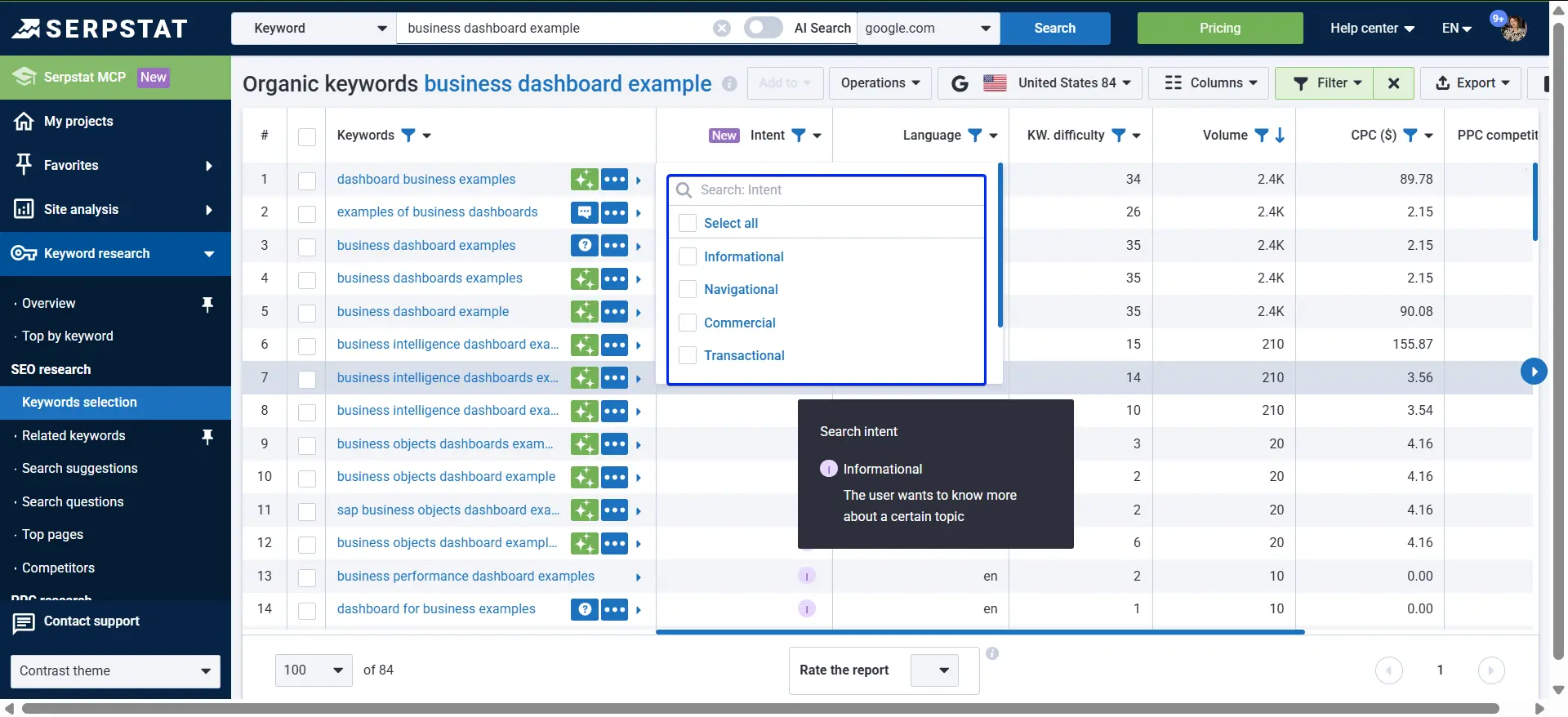
Understanding intent ensures the content matches user expectations.
Topic Relationships
Keyword databases often reveal clusters of related searches. For example:
- content strategy framework
- content strategy template
- content strategy examples
- content strategy process
These words represent a broader ecosystem of content topics rather than individual ideas.
Proper keyword analysis reveals how these ideas connect, which in turn will form the basis of a content strategy.
The Strategic Shift: From Keywords to Topic Clusters
Instead of using individual keywords, modern SEO focuses on topic clusters.
A Topic cluster is a set of pages that cover the same topic from different angles and link back to the main topic, called the pillar content.
This format helps search engines evaluate the depth of expertise on the website.
The Topic Cluster Model
A typical cluster contains three elements.
Pillar Page
The pillar page covers a broad topic in depth.
Example: Content Strategy Guide
This page provides a high-level overview and links to supporting articles.
Cluster Articles
Cluster content explores specific subtopics.
Examples:
- content strategy frameworks
- content strategy examples
- content audit guide
- measuring content ROI
Each article answers a focused question.
Internal Links
Internal links connect cluster articles back to the pillar page and to each other.
This structure sends a clear signal that the website covers the topic comprehensively.
Step-by-Step: Turning Keywords Into a Content Strategy
Now let’s look at the process I use to convert SEO data into a structured content plan.
Step 1: Group Keywords Into Topic Themes
The first step is clustering keywords into themes. For example, a keyword export might contain these phrases:
- content strategy framework
- content strategy process
- content strategy template
- content strategy examples
- content strategy tools
Instead of treating each keyword as a separate article idea, related queries should be grouped by search intent and topic similarity.
Tools like Serpstat’s Keyword Clustering Tool automatically organise large keyword lists into meaningful groups, helping marketers identify topic clusters and build a logical website structure.
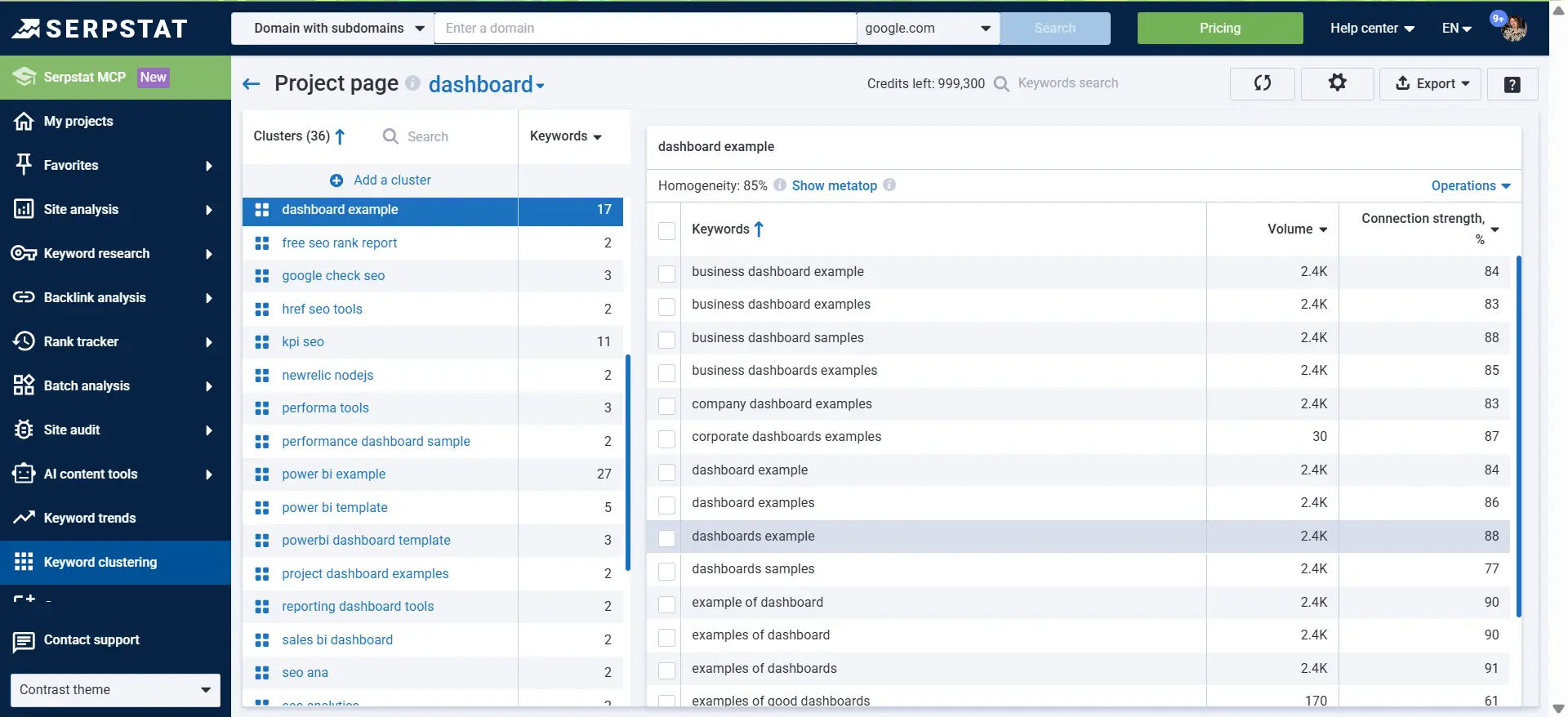
Serpstat’s tool helps you avoid keyword cannibalisation.
Step 2: Identify the Pillar Topic
Every cluster needs a central pillar.
The pillar topic should meet three criteria:
- broad search demand
- strong informational intent
- potential to link to multiple subtopics
For our example, the pillar could be:
“Content Strategy: The Complete Guide”
This page introduces the concept and connects to supporting articles that explore deeper aspects of the topic.
Step 3: Map Content to the Customer Journey
Effective SEO content aligns with the stages of the customer journey.
Awareness Stage
Users recognise a problem but are still learning.
Example topics:
- what is content strategy
- why businesses need a content strategy
Users compare approaches and solutions.
Example topics:
- content strategy frameworks
- content planning templates
- content audit process
Decision Stage
Users evaluate tools or services.
Example topics:
- content strategy tools
- how to measure content marketing ROI
Mapping topics to the journey ensures that content supports both traffic growth and conversion goals.
Step 4: Define Content Attributes
A well-structured strategy describes each piece of content clearly.
I usually define several attributes.
Content Type
Examples include:
- educational guides
- tutorials
- case studies
- industry reports
Publishing Cadence
Content cadence keeps production consistent.
Examples:
- weekly articles
- monthly research reports
- evergreen pillar pages
Content Format
Different formats reach different audiences.
Examples:
- blog articles
- videos
- interactive guides
- infographics
Target Audience
Each article should serve a specific audience segment.
For example:
- SEO specialists
- marketing managers
- founders of SaaS startups
Defining these attributes keeps the strategy focused.
Different content formats perform differently in search. Understanding content formats that drive organic traffic can help teams prioritise the highest-impact topics within their clusters.
Step 5: Build Semantic Internal Linking
Internal linking transforms separate articles into a knowledge system.
For example:
- A content strategy guide links to a content audit tutorial.
- The audit tutorial links to SEO performance tracking resources.
- The performance article links back to the main strategy page.
These connections reflect real conceptual relationships.
Search engines interpret this structure as a signal of topic authority.
Applying Context Layers to Strengthen the Strategy
Content strategy works best when it reflects several contextual layers.
Business Layer
SEO must support measurable outcomes.
Common content performance metrics include:
- organic traffic growth
- keyword ranking improvements
- conversion rate
- lead generation
Monitoring these metrics helps teams adjust their strategy.
Using marketing tools will allow you to monitor your position, assess your keyword exposure, and review your competitors' performance.
Technical Layer
An amazing content strategy alone is not enough if the technical foundation is not on point.
Key technical considerations include:
- logical site architecture
- optimised internal linking
- fast page loading speed
- structured data markup
These factors ensure that search engines can crawl and understand the content ecosystem.
User Psychology Layer
Successful content solves a real problem.
In marketing terms, this idea is sometimes referred to as the "Job to Be Done."
For example, a person who is searching for the term "content strategy template" may have a need or problem that is much deeper, such as:
"I need a plan in place to help organise the content creation process for my company."
Understanding what motivates a person allows a writer to write content that resonates with them, rather than just the keywords.
Distribution Layer
Publishing content is only the beginning.
High-impact strategies distribute content through multiple channels.
Common distribution channels include:
- email newsletters
- professional social networks
- industry communities
- partnerships with publishers
These channels amplify reach and generate backlinks that strengthen SEO performance.
Content Audits: Turning Old Posts Into Topic Clusters
Many websites already contain valuable content but lack structure.
A content audit helps reorganise existing articles into clusters.
I typically follow five steps.
List all articles currently published on the website.
Determine which articles belong to each topic cluster.
Look for missing subtopics that competitors cover.
Update statistics, examples, and SEO optimization.
Connect related articles to create a structured knowledge network.
After an audit, many websites recover traffic because search engines better understand the topic coverage.
Using SEO Data to Measure Strategy Performance
A content strategy should always have a measure of performance.
It helps the team understand what works and what does not work.
Key metrics include:
Keyword Visibility
It tracks the number of keywords in the top search results.
Organic Traffic Growth
It tracks the growth of search traffic over time.
Engagement Metrics
It tracks:
- time on page
- bounce rate
- content shares
Conversion Impact
The most valuable metric is the one that reflects how content impacts business outcomes like sign-ups or product inquiries.
SEO analytics tools help marketers track these metrics and continuously improve their strategy.
Preparing Content Strategy for AI-Driven Search
Search technology continues to evolve.
AI-powered search experiences increasingly provide answers directly within the results page. This trend changes how websites earn visibility.
To remain competitive, content strategies should focus on:
Deep Topic Coverage
Create comprehensive resources that explore topics from multiple perspectives.
Clear Structure
Well-organised content improves readability for both users and search engines.
Original Insights
Unique examples, data analysis, and expert commentary help differentiate content from generic articles.
Semantic Context
Content should reference related concepts and entities to strengthen topical relevance.
Websites that demonstrate real expertise across a topic cluster are more likely to appear in AI-generated answers.
Conclusion
A list of keywords is not a strategy; it is a starting point.
The true power of SEO marketing lies in using raw keyword data to build a structured content ecosystem.
Topic clusters allow SEO teams to link articles together, increasing semantic authority, and help search engines understand the depth of knowledge on a website.
By understanding the intent behind keywords and performance metrics, SEO teams can turn the raw data in a keyword list into a powerful engine for growth.
When executed well, a content strategy delivers more than traffic. It can build authority, drive business objectives, and maximise value from all content created.
In a competitive search landscape, a well-executed strategy is what sets a high-performing SEO marketing campaign apart from the competition.
Turn Your Keyword List Into Topic Clusters
🔎 Enter a keyword or domain to see how your topics connect
Discover More SEO Tools
Backlink Cheсker
Backlinks checking for any site. Increase the power of your backlink profile
API for SEO
Search big data and get results using SEO API
Competitor Website Analytics
Complete analysis of competitors' websites for SEO and PPC
Keyword Rank Checker
Google Keyword Rankings Checker - gain valuable insights into your website's search engine rankings
Recommended posts
Cases, life hacks, researches, and useful articles
Don’t you have time to follow the news? No worries! Our editor will choose articles that will definitely help you with your work. Join our cozy community :)
By clicking the button, you agree to our privacy policy.